Naba Ahmed
January 09, 2026
Running a small business often feels like juggling chainsaws—exciting, but slightly terrifying. You’re managing everything from marketing and sales to customer service and product development, all while trying to keep costs down. That’s where the magic of free AI tools for small businesses comes in. These powerful tools can automate tasks, provide valuable insights, and free up your time so you can focus on what you do best: growing your business. In this guide, we’ll explore the top free AI tools available and how they can transform your small business operations, from streamlining daily tasks to enhancing customer experiences. Get ready to discover how AI can become your secret weapon for success.

What are AI tools, and why do small businesses need them?
AI tools are software applications that use artificial intelligence technologies to handle tasks that typically require human intelligence—think data analysis, customer service interactions, and marketing automation. What used to take hours of manual work can now often be done in minutes, freeing you and your team to focus on higher-level tasks. And AI is no longer just for big corporations. Small businesses can now access these powerful tools to level the playing field and compete more effectively.
AI can provide actionable insights, helping you make data-driven decisions, reduce wasted time, and capitalize on opportunities faster. Imagine having a virtual assistant who can analyze your sales data, identify your best customers, and suggest targeted marketing campaigns. That’s the power of AI. These tools can also unlock resources you didn’t even know you had, from automating time-consuming tasks to crafting amazing customer experiences. Whether you’re looking to streamline your operations, increase customer satisfaction, or simply find new ways to grow, AI has something to offer. It can help you improve efficiency, reduce costs, and ultimately drive growth without requiring a huge investment. By adopting cost-effective AI strategies, you can streamline processes, maximize your resources, and stay competitive. AI can also enhance customer experiences, reduce operational costs, and increase production, making your business more efficient and profitable.
Top free AI tools for small businesses
Running a small business often means wearing many hats. Thankfully, free AI tools can help you manage everything from marketing to project management. Here are a few of my favorites:
Prezi AI: Your AI presentation maker
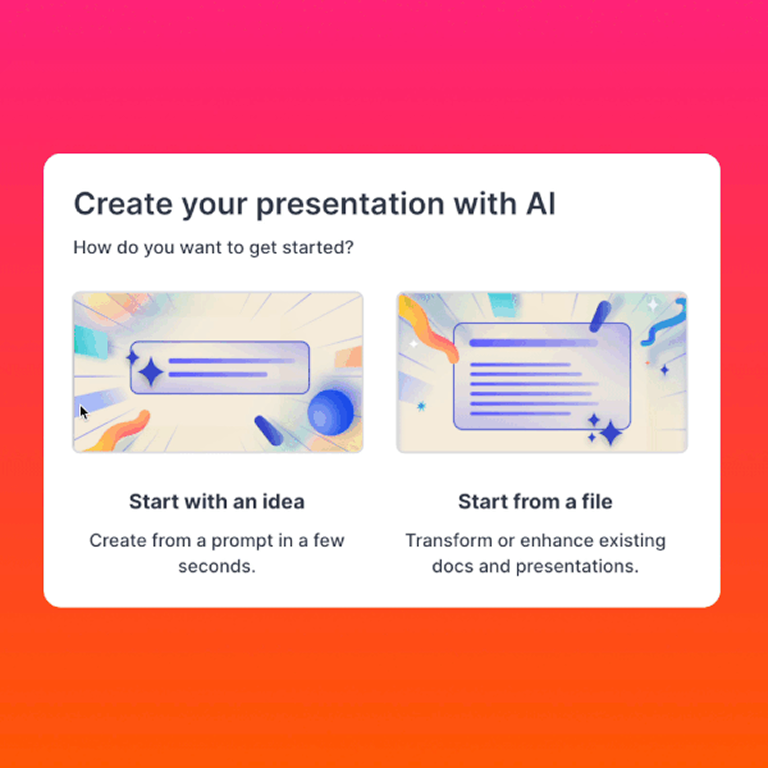
Prezi AI is an AI communication and presentation tool that helps small businesses turn ideas into structured, visual narratives that are easy to understand and share. Unlike task-specific AI tools, Prezi AI acts as a communication layer that connects strategy, messaging, and execution. It can be used for business strategy and planning to create strategic plans and roadmaps, align leadership and teams, and present goals and priorities visually. From the sales perspective, Prezi AI is great for building pitch decks and outlining product features. Prezi’s format is a great tool for customer education and onboarding because it makes it easy to create interactive training presentations that will improve retention.
And if you’re looking for ways to improve team collaboration during presentations, consider using Prezi for Teams.
ChatGPT: Your virtual assistant and content creator
ChatGPT is like having a tireless virtual assistant. This powerful AI chatbot can help with brainstorming, content creation, customer service, and even coding. It’s a game-changer for small businesses looking to increase productivity without expanding their team. Need help drafting a quick social media post or coming up with ideas for your next presentation? ChatGPT can handle it.
Canva: Design and create graphics easily
Canva’s free graphic design platform is a must-have for creating visually appealing content. With tons of templates and user-friendly AI tools, you can design professional-looking graphics, presentations, and social media posts even if you have zero design experience. Canva makes it easy to create branded materials that align with your design aesthetic, saving you time and money.
Mailchimp: Automate your email marketing
Email marketing can be time-consuming, but Mailchimp uses AI to make it easier. This platform helps you create targeted email campaigns, automate your communications, and analyze your results. Mailchimp’s AI-driven insights help you optimize your campaigns, ensuring your messages reach the right people at the right time.
Trello: Manage projects and collaborate with your team
Trello is a fantastic project management tool that helps teams stay organized and on track. Create boards, lists, and cards to manage tasks, deadlines, and progress. Trello facilitates seamless collaboration, making it easy for small business teams to communicate effectively and stay productive.
Google Analytics: Gain data-driven insights
Understanding your website traffic is crucial for any business. Google Analytics provides valuable data-driven insights into your audience, their behavior, and your website’s performance. This information helps you make informed decisions about your marketing strategies and improve your online presence.
Grammarly: Write and edit with ease
Clear and effective communication is essential for any business. Grammarly’s free AI-powered writing assistant helps you polish your writing, catching grammar and spelling errors and suggesting improvements to clarity and tone. Ensure your business communications are professional and error-free with this handy tool.
Hootsuite: Manage your social media presence
Social media management can feel overwhelming, but Hootsuite simplifies the process. Schedule posts, track engagement, and analyze performance across multiple platforms all in one place. Hootsuite streamlines your social media strategy, freeing up your time to focus on other aspects of your business.
Compare functionality and ease of use
When choosing free AI tools, comparing their functionality and ease of use is key. Think about what you need the tool to do and how easily you and your team can learn to use it.

Essential features for small businesses
Free AI tools offer a surprising number of features valuable to small businesses. Think about your goals: Do you want to analyze customer data, understand market trends, or keep an eye on competitors? Whether it’s automating email marketing with a tool like Mailchimp, managing projects with Trello, or gaining website insights with Google Analytics, free AI tools offer numerous opportunities to improve efficiency and drive growth.
User-friendliness and learning curves
One of the best things about many free AI tools is their user-friendliness. They’re often designed with non-technical users in mind. Look for tools with intuitive interfaces and onboarding processes that make it easy to get started.
Integrate with existing systems
While some free AI tools work as standalone solutions, consider how well they integrate with your existing systems. This can be a challenge for small businesses, as noted by AIgantic. Seamless integration can streamline your workflow and maximize the benefits of using AI. Look for tools that offer integrations with the platforms you already use, and be prepared to explore different options to find the best fit.
Benefits of using AI tools in your small business
Adding AI tools to your small business operations can feel like adding another team member—one dedicated to boosting efficiency and freeing you to focus on higher-level tasks.

Here’s how AI can benefit your small business:
Streamline operations and save time
AI can automate time-consuming, repetitive tasks, giving you back valuable time in your day. Think about the hours spent scheduling social media, sending emails, or pulling data. AI tools can handle these tasks, allowing you to focus on developing new products, connecting with customers, or planning your next marketing campaign. AI can also analyze consumer data, improve customer experiences, and optimize your marketing efforts.
Engage customers and boost satisfaction
AI can personalize the customer experience, leading to greater satisfaction and loyalty. Imagine sending targeted offers based on past purchases or providing instant customer support through AI-powered chatbots. These tools create a more engaging and responsive experience for your customers, fostering stronger relationships and encouraging repeat business. AI is a powerful tool for making smarter decisions across the board, from personalized marketing and enhanced customer service to optimized inventory management.
Improve decisions with data-driven insights
Free AI tools can provide valuable data-driven insights to inform your business decisions. AI-powered platforms can analyze customer data, market trends, and competitor activity, helping you identify opportunities and potential challenges faster. This data empowers you to make informed decisions about product development, effective marketing strategies, and overall business growth.
Save money with cost-effective tools
One of the most significant benefits of using free AI tools is the cost savings. By automating tasks and streamlining processes, you can reduce labor costs and maximize your existing resources. This is particularly beneficial for small businesses with limited budgets. Adopting cost-effective AI strategies allows small businesses to stay competitive without overspending. Free AI tools can level the playing field, giving you access to powerful technology without the hefty price tag.
Free AI tools often have limitations, especially with features. Many free versions offer only basic functionality, while more advanced features require a paid subscription. For example, a free AI writing tool might limit the number of words you can generate each month or restrict access to certain writing styles. As your business grows, these restrictions can become obstacles. This means you might eventually need to upgrade to access the tool’s full potential.
Data privacy and security considerations
Data privacy and security are crucial for any business, especially when using AI tools. Free tools may not always offer the same level of security as paid versions. Forbes highlights the challenges businesses face regarding data privacy and security with AI, emphasizing the importance of protecting sensitive information. This is particularly relevant for small businesses handling customer data or confidential business information. Before using any free AI tool, carefully review its privacy policy and ensure it meets your business’s security standards.
Support and customization limitations
Another potential drawback of free AI tools is the limited support and customization. Paid tools often come with dedicated customer support and options to tailor the tool to your specific needs. With free versions, you might be on your own, which can be challenging if you’re new to AI. This can be a barrier for small business owners who may not have dedicated IT support. Also, integrating free AI tools with your existing business processes might be difficult due to limited customization options.
Implement AI tools effectively
Integrating new tools into your workflow can feel like a huge undertaking. But implementing AI tools effectively doesn’t have to be overwhelming. By following a structured approach, you can ensure a smooth transition and maximize the benefits of AI for your small business.

Define objectives for AI adoption
Before diving into implementation, take time to define clear objectives. What do you hope to achieve with AI? Do you want to automate customer service, personalize marketing, or streamline project management? Aligning your AI strategy with your overall business goals is crucial for measuring the success of your efforts. This clarity will not only guide your tool selection but also provide a benchmark for evaluating their effectiveness. Understanding the impact of AI projects depends on how well they align with your business targets.
Train your team on new technologies
Introducing new technologies requires adequate training so your team feels comfortable using them. Start with user-friendly, plug-and-play AI tools designed for non-technical users. Many platforms offer intuitive interfaces and onboarding resources. Encourage your team to explore these resources and participate in training sessions. This empowers them to embrace the tools and contribute to a successful AI integration.
Measure success and return on investment
Once your AI tools are up and running, it’s essential to track their performance. Establish key performance indicators (KPIs) that align with your initial objectives. Are you seeing increased customer engagement, improved operational efficiency, or cost savings? Regularly monitoring these metrics offers valuable insights into the effectiveness of your AI initiatives. This data-driven approach allows you to refine your strategy and optimize your use of AI tools.
Overcome common implementation challenges
Implementing new technology often comes with challenges. Small businesses might face resource constraints, data limitations, or integration issues. Anticipating these hurdles and developing strategies to address them is key to a successful implementation. AIgantic highlights the importance of careful resource allocation and strategic planning for small businesses adopting AI. By proactively addressing these challenges, you can ensure a smoother transition and maximize the potential of your AI tools.
Choose the right AI tools for your business
Finding the right AI tools can feel overwhelming with so many options available. But by focusing on a few key areas, you can narrow down the choices and select the tools that will truly benefit your small business. It’s all about finding the right fit for your specific needs and goals.
Assess your specific business needs
Before exploring AI tools, take a step back and assess your business needs. What are your biggest pain points? Are you struggling with content creation, customer service, or marketing? Perhaps project management is a constant headache, or you’re drowning in data and need help making sense of it all.
Once you’ve identified your key challenges, you can start looking for AI tools that offer solutions. This targeted approach will help you avoid getting sidetracked by flashy features you don’t actually need and focus on tools that will deliver real value.
Evaluate tool compatibility and scalability
When evaluating AI tools, compatibility and scalability are crucial factors to consider. Think about how the tool will integrate with your existing systems and workflows. Will it require a complete overhaul of your current processes, or can it seamlessly fit into your existing setup?
Also, consider your future growth plans. Will the tool adapt to your evolving needs? Choosing a tool with this flexibility will save you time and resources later. It’s important to remember that AI tools don’t exist in isolation; they need to work within your business environment—both now and in the future.
Plan for future growth and adaptability
Implementing AI tools is not a one-time project; it’s an ongoing process. As your business grows and changes, your AI needs will evolve, too. That’s why it’s essential to plan for future growth and adaptability from the outset.
Establish clear metrics and key performance indicators (KPIs) to track the success of your AI initiatives. Regularly analyze these metrics to identify areas for improvement and ensure your tools continue delivering value. This ongoing analysis will help you refine your processes and ensure sustained growth. By taking a proactive approach to planning and adaptation, you can maximize the long-term benefits of AI for your small business.
This isn’t always true. Many free AI tools offer a taste of their capabilities but reserve premium features for paid subscribers. Think of it like a test drive—you get a feel for the software but might need to upgrade for full access. For example, a free version might limit the number of images you can generate or the amount of text you can process. Understanding these limitations upfront will help you make informed decisions.
“Free tools lack security measures”
It’s easy to assume that free means less secure, but that’s not always the case. Just like any software, free AI tools can be vulnerable. However, many reputable providers prioritize security, even for their free products. It’s crucial to do your research and choose tools from trusted sources. Consider factors like data encryption and user authentication when evaluating security.
“No support is available for free versions”
While dedicated customer support might be limited for free users, many free AI tools offer valuable resources like FAQs, knowledge bases, and community forums. These resources can often provide the answers and guidance you need to get started and troubleshoot common issues. Don’t let the lack of direct support deter you from exploring the benefits of free AI tools.
Tips for successful AI integration
Successfully integrating AI tools into your small business operations doesn’t require a complete overhaul. It’s about making smart choices and implementing changes strategically. Here’s how:
Start small and scale gradually
Don’t feel pressured to implement every AI tool at once. Begin by identifying one or two key areas where AI could offer the most significant improvements. Maybe you’re struggling with social media management, or perhaps email marketing is taking up too much time. Choose a specific area, implement a relevant AI tool like Hootsuite or Mailchimp, and get comfortable with its functionality. Once you see positive results, you can gradually expand AI adoption to other areas of your business. This measured approach helps manage risks and allows your team to adapt to new technologies at a comfortable pace. Starting with a pilot project lets you gather data and refine your AI strategy before a wider rollout.
Encourage innovation
Integrating AI successfully isn’t just about the technology itself; it’s about fostering a culture of innovation within your team. Encourage your employees to explore new AI tools and share their findings. Create a space for experimentation and learning, where team members feel comfortable testing different AI applications and identifying potential use cases. This collaborative approach can lead to unexpected discoveries and unlock new opportunities for growth.
If you’re looking for an AI tool that will make presentations efficiently, try Prezi AI today!
Frequently Asked Questions
What if I don’t have any technical expertise? Can I still use AI tools? Absolutely! Many free AI tools are designed specifically for non-technical users. Look for tools with intuitive interfaces and user-friendly onboarding processes. Several platforms offer helpful resources and tutorials to guide you through the process, even if you’re brand new to AI.
How much time will it take to implement AI tools into my business? The implementation time depends on the complexity of the tool and your specific needs. Some tools can be integrated within minutes, while others might require a more gradual approach. Start small, focusing on one or two key areas where AI can make the biggest impact. Once you’re comfortable, you can gradually expand your use of AI.
Are free AI tools secure enough for my business data? Data security is a valid concern with any software, including free AI tools. While free tools might not always offer the same level of security as paid enterprise versions, many reputable providers prioritize security for all their products. Always review the tool’s privacy policy and ensure it aligns with your business’s security standards.
What if a free AI tool doesn’t offer all the features I need? Many free AI tools offer basic functionality, while more advanced features require a paid subscription. If you find a free tool you like but need more capabilities, consider upgrading to a paid version. It’s a good idea to start with the free version to test it out and see if it’s a good fit before committing to a paid plan.
How can I measure the success of using AI tools in my business? Before implementing any AI tool, define clear objectives and key performance indicators (KPIs). What do you hope to achieve with AI? Whether it’s increased customer engagement, improved efficiency, or cost savings, tracking these metrics will help you measure the impact of AI on your business. Regularly review your progress and adjust your strategy as needed.