Naba Ahmed
January 13, 2026
Let’s be honest: most pitch decks are forgettable. A generic template filled with bullet points about your services isn’t enough to capture a potential client’s attention, let alone their business. To stand out, your marketing agency pitch deck needs to be a compelling, strategic narrative that speaks directly to the client’s unique challenges and goals. It should feel less like a sales tool and more like the beginning of a partnership. In this article, we’ll break down exactly how to build that narrative, from structuring your story and designing for impact to delivering your pitch with confidence.
Key takeaways
- Lead with a custom strategy: Your pitch should be a direct response to the client’s specific needs. Move beyond a generic list of services and use research to build a tailored plan that proves you understand their business and are the right partner to solve their problems.
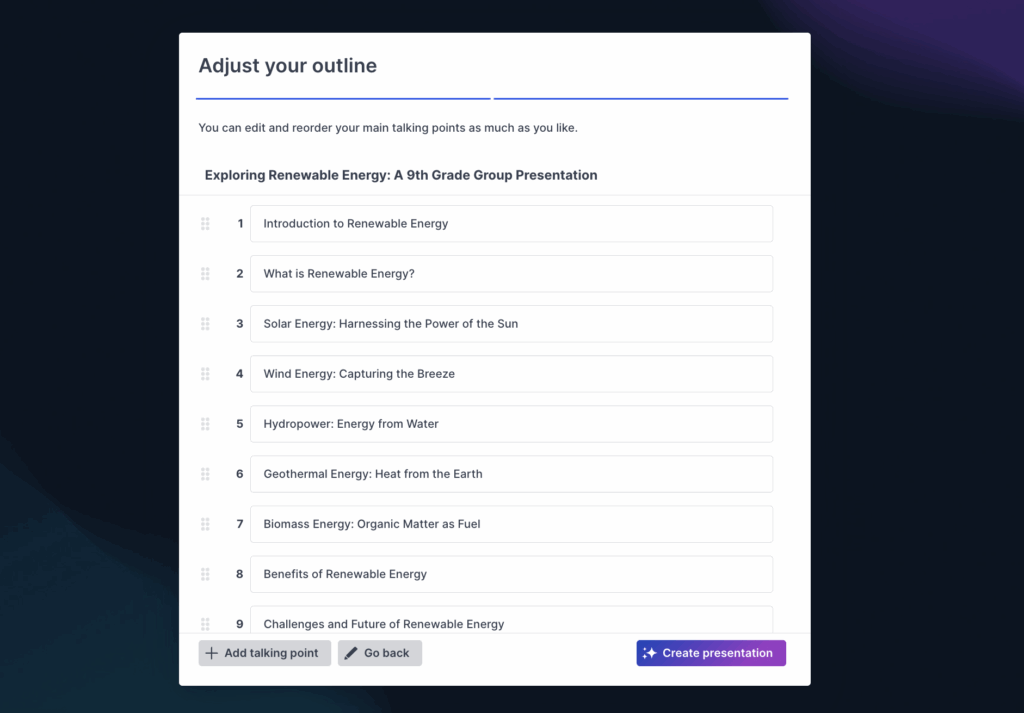
- Structure your deck as a compelling story: A great pitch follows a clear narrative arc. Guide your client from their current challenge to a successful future by outlining your vision, presenting a clear strategy, providing proof with case studies, and introducing the expert team who will get them there. By adding your content to Prezi AI, it will naturally create an outline that tells a story.
- Prioritize polished design and confident delivery: The quality of your presentation reflects the quality of your work. A clean, professional, and interactive design combined with a well-prepared, confident delivery shows respect for the client and builds the trust needed to win the account.
What is a marketing agency pitch deck?
Think of a marketing agency pitch deck as your agency’s first impression, resume, and sales pitch all rolled into one compelling presentation. It’s the tool you use to introduce your agency to potential clients, showcasing your services, expertise, and unique approach. But it’s much more than a simple list of what you do. A great pitch deck tells a story—one where the client is the hero, and your agency is the expert guide ready to help them succeed.

The main goal is to build a narrative that connects with your potential client’s specific challenges and goals. Instead of just listing your accomplishments, your deck should demonstrate a deep understanding of their business and present a clear, customized strategy for how you can help them grow. It’s a concise, visually engaging presentation designed to communicate your value proposition quickly and effectively. This is your chance to prove you’re not just another agency, but the right partner for them.
A winning pitch deck balances sharp design with solid data. It’s not about cramming every detail onto a slide; it’s about presenting the most important information in a way that’s easy to digest and visually appealing. The best decks are brief yet informative, using visuals to support the story you’re telling. This strategic blend of design and data is what turns a standard presentation into a powerful tool for winning new business. It sets the stage for a conversation and, hopefully, a long-term partnership.

7 key elements every pitch deck needs
A winning pitch deck is more than a collection of slides; it’s a story that convinces a potential client that your agency is the perfect partner for them. While every pitch should be tailored, there are seven essential elements that form the backbone of a persuasive presentation. Think of these as the core chapters of your story. Getting them right gives you a solid framework to build on, ensuring your message is clear, compelling, and complete.
From the moment you start to your final slide, each element has a specific job to do in moving your client from curious to convinced. This structure isn’t about being rigid; it’s about being strategic. It ensures you cover all your bases, from grabbing their attention at the start to proving your value with concrete evidence and introducing the talented people who will make it all happen. By following this blueprint, you can focus your energy on what matters most: connecting with the client and showing them a clear path to success with your agency leading the way. It transforms your pitch from a simple sales tool into a powerful narrative of partnership and potential.
1. A strong opening slide
Your first slide is your first impression. This is where you want to make it count. This is your chance to grab the client’s attention and set the stage for everything that follows. Instead of a generic title slide, create a visually compelling opening that immediately communicates your agency’s unique value. Start with a powerful statement that addresses a key pain point for the client or presents a bold vision for their brand. A great opening shows you understand their world and have tailored solutions ready. It’s not just about introducing your agency; it’s about showing the client you’re already thinking about their success from the very first moment.
2. Your agency’s vision
After you’ve hooked them, it’s time to share your “why.” This slide should briefly cover your agency’s mission, core values, and long-term goals. This isn’t just corporate fluff; it’s about building trust and showing the client what drives you. Do your values align with theirs? Are you passionate about the same things? Sharing your vision helps the client see you as a potential long-term partner, not just a service provider hired to complete a task. It shows them you have a guiding philosophy behind your work, which adds depth and credibility to your proposal.
3. A breakdown of your services
Here’s where you get into the “what” and “how.” Clearly outline the services you offer, but don’t just list everything you can do. The key is to connect your services directly to the client’s problems. Frame each service as a solution. For example, instead of just saying “We offer SEO services,” explain how your SEO strategy will solve their problem of low website traffic and increase their online visibility. When your team can collaborate on this section, you can ensure every service is presented with a clear benefit for that specific client, making your pitch much more relevant and impactful.
4. A strategy built for them
This is the heart of your pitch and where you prove you’ve done your homework. A generic, one-size-fits-all approach won’t impress anyone. This section should detail a customized strategy that shows how your plans directly align with the client’s specific goals. Use the research you’ve done on their company, industry, and competitors to inform your proposal. Visually map out the steps you’ll take and the milestones you expect to hit. This demonstrates that you’re not just selling services; you’re offering a thoughtful, strategic partnership designed to get them the results they need.
5. Proof of your past success
Anyone can make promises, but you need to show you can deliver. This is where you build credibility with hard evidence. Include two or three concise case studies or testimonials from past clients that showcase your agency’s ability to achieve outstanding results. For maximum impact, choose examples that are relevant to the prospective client’s industry or challenges. You could even create a short video testimonial to make your proof more dynamic and personal. Numbers speak volumes, so use data and metrics to quantify your successes whenever possible.
6. Clear and simple pricing
Don’t make your potential client work hard to understand your costs. Ambiguity in pricing can create distrust and confusion, so aim for complete transparency. Present your pricing in a clear, easy-to-understand format. Whether you use tiered packages, project-based fees, or a retainer model, break down exactly what is included for the price. Visuals can be very helpful here. A simple chart or graphic can make your pricing options much easier to compare and digest. Being upfront and clear about the investment shows respect for the client and their budget.
7. An introduction to your team
Finally, put a face to the name. Business is still human-to-human, and clients want to know who they’ll be working with. Introduce the key team members who would be assigned to their account. Go beyond just their names and titles; highlight their specific skills and relevant experience. Explain why each person is the right fit for the client’s project. This adds a personal touch and helps the client feel more connected to your agency. Knowing there’s a talented and dedicated team ready to go gives them confidence in your ability to execute the strategy you’ve presented. You can structure this section to flow naturally from your strategy, showing the experts behind the plan.
Design a pitch deck that gets noticed
The way your pitch deck looks is just as important as what it says. Great design isn’t about adding flashy graphics for the sake of it; it’s about communicating your message with clarity and impact. Think of your deck as the opening act for your agency’s creativity. A clunky, confusing, or generic design can signal to a potential client that your work might be the same. On the other hand, a polished, thoughtful, and professional presentation shows you value quality and understand how to capture an audience’s attention—which is exactly what they’re hiring you to do for them.

Your pitch deck is a visual extension of your brand. It should feel cohesive, look professional, and be easy for your client to follow. Every design choice, from the color palette to the font size, should be intentional. The goal is to create a seamless experience that guides your client through your agency’s story and solution. By focusing on strong visual storytelling, incorporating interactive elements, and ensuring your deck works on any device, you can create a presentation that not only gets noticed but also gets remembered.
Tell a visual story
Your pitch deck shouldn’t be a list of facts and figures; it should be a compelling narrative. The most effective decks use a strategic blend of design and data to tell a story that positions the client as the hero and your agency as the expert guide. Start by establishing a consistent visual theme. This includes using your brand’s colors, fonts, and logo throughout the presentation to create a cohesive and professional look. This consistency builds brand recognition and makes your content easier to follow.
Use high-quality images, icons, and charts to break up text and make complex information digestible. Instead of a slide packed with bullet points about market trends, show a clean, easy-to-read graph. Visuals help your audience process and retain information more effectively than text alone. Remember, you’re crafting a journey that walks the client from their current challenges to their future success with your agency. A strong visual story makes that journey feel exciting and believable.
Add interactive elements
In a world of back-to-back meetings, a static, linear presentation can quickly lose your audience’s attention. Adding interactive elements transforms your pitch from a monologue into a dynamic conversation. This approach makes your presentation a memorable and engaging experience, allowing you to guide the client through your agency’s story in a way that feels collaborative and fresh. Instead of just clicking through slides, you can create a more immersive journey.
With a tool like Prezi, you can easily incorporate interactive features. Imagine zooming in to reveal key data points, clicking on a team member’s photo to see their bio, or playing an embedded video of a client testimonial without ever leaving your presentation. These elements keep your audience engaged and allow you to tailor the conversation in real-time based on their questions and interests. Using interactive presentations shows that your agency is modern, adaptable, and focused on the client’s experience.
Make sure it’s mobile-friendly
Your pitch meeting might be the main event, but your deck will likely be viewed before and after on various devices. It’s crucial to ensure your presentation looks just as good on a smartphone as it does on a projector screen. A pitch deck that is difficult to read or navigate on a mobile device can come across as unprofessional and careless. First impressions matter, and you want every interaction with your agency to be a positive one.
To make your deck mobile-friendly, stick to a clean, simple layout. Use large, legible fonts and provide plenty of white space to avoid a cluttered look. Keep your slides brief and focused on one key idea. Test your presentation on different screen sizes to make sure all your text and visuals are clear and properly aligned. A responsive design ensures your message is delivered effectively, no matter how or where your client is viewing it.
5 pitch deck mistakes to avoid
You’ve put in the work to craft a brilliant marketing strategy for a potential client. The last thing you want is for a clumsy pitch deck to get in the way of landing the account. Even the most experienced agencies can make simple mistakes that undermine their message. By steering clear of these common pitfalls, you can make sure your presentation is as compelling as the ideas within it. Let’s walk through the five biggest mistakes to avoid so your pitch deck can truly shine.
1. Too much information
One of the quickest ways to lose an audience is to overwhelm them. It’s tempting to pack every slide with data and text, but this often backfires. When a slide is too crowded, your key message gets lost, and your audience doesn’t know where to focus. Remember, your pitch deck is a visual aid to support your conversation, not a document to be read. Keep your slides clean and focused on one main idea. Use visuals to tell the story and save the finer details for the conversation or a follow-up document. Think of each slide as a billboard, not a page in a novel.
2. Using a generic template
As a marketing agency, you’re selling creativity. Showing up with a generic, out-of-the-box template sends the wrong message. It can make your pitch feel impersonal and suggest a one-size-fits-all approach. Your pitch deck is the first sample of your agency’s creative output a potential client sees, so it should reflect your brand’s personality and the care you put into your projects. Take the time to create a custom design or adapt a template so it feels uniquely yours. This shows you’ve invested thought into the presentation, signaling the level of effort the client can expect from you.
3. Forgetting the client
This might be the most critical mistake: making the pitch all about you. While you need to introduce your agency, the presentation’s true focus should be on the client. Failing to tailor your pitch to their specific challenges and goals makes it feel irrelevant. Before you design a single slide, do your research. What are their biggest pain points? Who are their competitors? What does success look like for them? Your pitch should position your agency as the solution to their specific problems. When you show you’ve done your homework, you’re not just a vendor; you’re a potential partner invested in their success.
4. Confusing visuals
A picture may be worth a thousand words, but a confusing one just creates headaches. Poor design choices can make your deck difficult to understand. This includes using low-quality images, inconsistent fonts, or cluttered layouts that lack a clear visual hierarchy. Your design should guide the viewer’s eye to the most important information. Use high-resolution graphics, stick to a consistent color palette, and embrace white space. When presenting data, use clear charts to make complex numbers easy to digest. A polished, professional visual design communicates that your agency is organized and capable of producing high-quality work.
5. A vague call-to-action
You’ve made it to the end of your presentation. The client is engaged. Now what? Ending your pitch without a clear call-to-action (CTA) is like running a marathon and stopping a foot from the finish line. It leaves the client wondering what the next step is. Don’t leave them hanging. Your final slide should explicitly state what you want to happen next. Do you want to schedule a follow-up call? Should they review a proposal? Be direct and make it easy for them to say yes. A strong CTA provides a clear path forward and is a crucial part of how you deliver your pitch effectively.
The best tools for creating your pitch deck
Choosing the right tool to build your pitch deck can feel like a big decision, but it doesn’t have to be. The best software is simply the one that helps you tell your story most effectively. Think about your team’s workflow and what you want your final presentation to feel like. Are you working with a team and need to collaborate in real-time? Is stunning, custom design your top priority? Or do you want to break free from the traditional slide-by-slide format and create something truly dynamic?
Each tool has its own strengths, and what works for one agency might not be the best fit for another. Some platforms are built for speed and simplicity, offering templates that let you plug in your content and go. Others provide a blank canvas with powerful features for creating a completely unique and interactive experience. The goal is to find a tool that not only holds all your great ideas but also presents them in a way that grabs and holds your client’s attention. We’ll walk through some of the most popular and effective options so you can find the perfect match to build your next winning pitch.
Prezi AI
Building a great pitch deck takes time—especially when every presentation needs to feel custom, strategic, and visually compelling. This is where Prezi AI becomes a powerful advantage for marketing agencies. Instead of starting from a blank canvas, Prezi AI helps you turn ideas, notes, or a rough brief into a structured, persuasive pitch deck in a fraction of the time.
Prezi AI acts like a creative and strategic co-pilot. You can begin with a simple prompt—such as your client’s industry, goals, or key challenges—and Prezi AI will help generate a logical narrative flow for your deck. This ensures your presentation follows a clear story arc, guiding the client from their current problem to a future where your agency is the solution. It’s especially helpful for shaping strong openings, sharpening value propositions, and making sure each section supports the overall pitch.
Beyond structure, Prezi AI helps refine your messaging. It can rewrite slide content to be more client-focused, simplify complex ideas, or adjust tone to match different audiences. For agencies pitching frequently, this makes it much easier to customize decks for each prospect without rewriting everything from scratch. You can quickly adapt language for different industries, reposition services around specific goals, or tighten copy to keep slides clear and impactful.
As your content takes shape, you can organize ideas visually, emphasize relationships between concepts, and design a presentation that feels more like a conversation than a slideshow. The result is a pitch deck that’s not only faster to create, but also more engaging and memorable to deliver.
For marketing agencies, speed and quality both matter. Prezi AI helps you move faster without sacrificing strategy or creativity, making it easier to produce polished, customized pitch decks that stand out—and win—more business.
Microsoft PowerPoint
PowerPoint is the classic presentation software for a reason. It’s familiar, reliable, and packed with features. Nearly everyone has used it at some point, so there’s virtually no learning curve for your team. With a massive library of built-in and third-party templates, you can find a starting point for almost any style of pitch deck. While it may not have the same dynamic flair as other tools, a well-designed PowerPoint can still be incredibly professional and persuasive. It’s a solid, dependable choice when you need to deliver a straightforward and polished presentation.
Google Slides
For teams that thrive on collaboration, Google Slides is a fantastic option. Its biggest advantage is the ability for multiple people to work on the deck at the same time, leaving comments and making edits in real-time. Since it’s part of the Google Workspace ecosystem, it integrates seamlessly with other tools like Sheets and Docs, making it easy to pull in data and content. It’s a free, cloud-based tool, so your team can access and work on the pitch from anywhere. If your process involves a lot of back-and-forth and teamwork, Google Slides streamlines the entire workflow.
Canva
If you don’t have a dedicated designer on your team, Canva can make you look like you do. It’s known for its incredibly user-friendly interface and a vast library of professionally designed templates and graphic elements. You can create a visually stunning pitch deck just by dragging and dropping elements into place. Canva makes it simple to maintain brand consistency with your colors and logos and offers a ton of inspiration to get you started. It’s the perfect tool for agencies that want to produce a beautifully designed pitch deck quickly, without needing any specialized design skills.
Visme
Visme is a powerful tool that shines when it comes to visualizing data. If your pitch deck is heavy on charts, graphs, and infographics, Visme can help you present that information in a clear and engaging way. It’s more than just a presentation tool; it’s a complete design platform that helps you turn complex data into compelling visual stories. With a wide range of templates and customization options, you can create a professional-looking pitch deck that effectively showcases your agency’s data-driven approach. It’s a great choice for demonstrating ROI and proving your past success with hard numbers.
Pitch
Pitch is a modern presentation tool built specifically with collaboration and aesthetics in mind. It focuses on helping teams work together efficiently to create beautiful presentations. The platform offers a library of stylish, easy-to-customize templates that ensure your pitch deck looks polished and professional. Features like real-time editing, assigned tasks, and comment threads make it easy to manage the creation process from start to finish. For agencies that value both a streamlined workflow and a high-quality design finish, Pitch provides a great balance of both.
How to customize your pitch for each client
If you walk into a meeting with a generic, one-size-fits-all pitch deck, you’ve likely already lost. Potential clients can spot a canned presentation from a mile away, and it sends a clear message: you haven’t taken the time to understand their unique business. Customizing your pitch is non-negotiable. It’s how you show a potential partner that you’re already invested in their success and are thinking strategically about their specific challenges and goals. A tailored approach transforms your presentation from a simple sales tool into the beginning of a strong client relationship. It proves you see them as a partner, not just another name on a list.
This is where you move beyond just listing your services and start demonstrating your value. Instead of talking at them about what you do, you’re talking with them about what you can achieve together. By focusing on their world—their market, their customers, their ambitions—you make it easy for them to picture a future with your agency at their side. It’s the single most effective way to cut through the noise and make a memorable impression that lasts long after the meeting ends. A generic deck gets you forgotten; a custom deck gets you hired.
Understand what your client needs
Before you even think about designing a slide, you need to do your homework. This goes deeper than a quick glance at their homepage. Get familiar with their industry, their main competitors, and their biggest challenges and goals. What are people saying about them on social media? Have they launched any major campaigns recently? A successful pitch isn’t about you—it’s about them. By thoroughly researching your client, you gather the insights needed to build a narrative that frames your agency as the perfect solution to their specific problems.
Adapt your content and approach
Once you have a solid understanding of the client, you can tailor every part of your presentation. This isn’t just about adding their logo to your template; it’s about strategically adjusting your content to mirror their needs. If your research shows they’re struggling to connect with a younger audience, lead with case studies that highlight your social media successes. You could even create a short, personalized Prezi Video message to introduce your team. The goal is to show them you don’t just offer services; you provide targeted solutions. A customized presentation demonstrates that you’re not just another agency—you’re the right partner for them.
Measure and improve your pitch deck’s performance
Creating a great pitch deck is just the first step. The real magic happens when you start treating it like a living document—one that you constantly measure and refine. By paying attention to how potential clients interact with your deck and actively seeking feedback, you can turn a good pitch into an undeniable one. This iterative process ensures your pitch stays sharp, relevant, and effective, helping you land the clients you want.
What metrics to track
A successful pitch deck doesn’t just get a “yes”—it captures attention from the very first slide. Instead of sending your deck into the void, use analytics to see what’s working. Track metrics like open rates, how long viewers spend on each slide, and what percentage of people finish the entire presentation. These numbers tell a story. Are people dropping off at your pricing slide? Maybe it needs more context. Are they skipping past your case studies? Perhaps they aren’t visual enough. Data shows that adding interactive content can make 41% more people scroll to the end. These insights are gold, helping you pinpoint exactly where to make improvements for the next pitch.
Use feedback to get better
Don’t be afraid to ask, “How can we do better?” Many agencies feel their decks aren’t as strong as their competitors’ but aren’t sure how to fix them. The simplest solution is to ask for honest feedback. After a pitch, whether you win or lose the client, ask for their thoughts on the presentation. You can also get a fresh perspective from a trusted mentor or a designer who can spot weaknesses in your story or visuals. This process of building better pitch decks is continuous. Each piece of feedback is a chance to refine your message, strengthen your narrative, and make your next pitch even more compelling.
How to deliver your pitch with confidence
You’ve designed a brilliant pitch deck, and now it’s time for the main event. A great deck is only half the battle; how you deliver it makes all the difference. True confidence isn’t about being slick or overly rehearsed—it’s about being so well-prepared that you can connect with your audience authentically. When you know your material inside and out, you can focus on the conversation instead of worrying about what comes next. Think of your delivery as the final, crucial step that brings your agency’s story to life. It’s your chance to show the client not just what you do, but who you are and why you’re the right partner for them.
This moment is where your agency’s special value and tailored solutions truly shine. Your presentation should feel less like a monologue and more like the beginning of a collaborative relationship. By focusing on clear communication and genuine connection, you transform a standard pitch into a memorable experience. This approach leaves a lasting impression and makes the client feel understood and valued from the very start. Remember, they aren’t just buying your services; they’re buying into a partnership with you and your team. Your confident, personable delivery is what seals the deal.
Prepare for your presentation
Confidence begins long before you step into the room. Your first step is to get to know your client on a deeper level. Go beyond a quick website scan and really dig into their business, industry, challenges, and goals. When you can speak their language and show you understand their world, you build instant credibility. Once you’ve done your research, create an outline that supports the story you want to tell. This isn’t just a list of slides; it’s your narrative roadmap. Weave in key facts, powerful quotes, and your best success stories to back up your points. This preparation is your safety net, allowing you to present with a clear, logical flow.
Present like a pro
When it’s time to present, your main goal is to connect with the people in the room. Start strong by using a powerful image or a short video to immediately capture their attention. Tools like Prezi Video let you appear right alongside your content, creating a more personal and dynamic opening. From there, focus on telling a compelling story. Instead of just listing your services, frame your pitch as a narrative that shows how you can solve your client’s specific problem. A great pitch balances a strong story with solid information and clean, effective visuals. When you tell a visual story, you make your message more relatable and memorable, which helps you build a genuine connection with your potential client.
Helpful pitch deck resources
Creating a standout pitch deck doesn’t mean you have to start from a blank page. Having the right resources on hand can streamline the entire process, from finding the perfect image to building a compelling chart. Think of these tools as your creative support system, helping you build a professional and persuasive deck more efficiently. Whether you need a solid design foundation, high-quality visuals to tell your story, or a way to make your data pop, there’s a resource out there to help. Using these tools allows you to focus your energy on what matters most: crafting a message that resonates with your potential client and showcases your agency’s unique value.
Design templates
A great template does more than just make your deck look good—it provides a narrative structure that guides your client through your pitch. Instead of guessing which slides you need, a well-designed template offers a proven framework for telling a compelling story. You can find tons of pitch deck templates built for specific goals, like winning new business or securing funding. The best approach is to choose a template that aligns with your agency’s brand and then customize it to speak directly to the client. This gives you a professional starting point while still leaving plenty of room for your unique personality to shine through.
Stock image libraries
Your pitch deck’s visuals are just as important as your words. High-quality images, icons, and graphics make your presentation more engaging and can help communicate complex ideas in a single glance. Generic or low-resolution images can make your agency look unprofessional, so it’s worth spending time finding the right visuals. Websites like Unsplash and Pexels offer vast libraries of free, high-quality photos. The key is to maintain a consistent visual style throughout your deck. Choose images and graphics that share a similar color palette and aesthetic to create a cohesive and polished final product.
Data visualization tools
Data is powerful, but a slide full of numbers is a surefire way to lose your audience’s attention. This is where data visualization comes in. Turning your performance metrics, market research, and projections into clear, easy-to-understand charts and graphs makes your information digestible and memorable. Tools like Prezi allow you to create dynamic charts that can reveal insights as you present, helping you tell the story behind the numbers. By presenting your data visually, you make your successes and strategies more tangible, proving your agency’s competence without overwhelming your potential client with spreadsheets.
Turn your pitch into a partnership
A great marketing agency pitch deck isn’t about flashy slides or clever buzzwords. It’s about clarity, relevance, and connection. When you lead with a client-focused strategy, tell a compelling story, and support it with thoughtful design and confident delivery, your pitch stops feeling like a sales presentation and starts feeling like the first step toward a real partnership. Every element of your deck should reinforce one message: you understand the client’s challenges, and you’re the right team to help solve them.
The most successful agencies treat their pitch decks as living tools, not static files. They refine them based on feedback, adapt them for every prospect, and use design and storytelling to stand out in a crowded market. When you do that consistently, your pitch deck becomes more than a way to win business—it becomes a reflection of how you work.
With Prezi AI, you can turn ideas, briefs, or rough notes into structured, story-driven pitch decks in minutes. Prezi AI helps you create a clear narrative, refine your messaging, and customize presentations for each client—without starting from scratch every time. Combined with Prezi’s interactive, visual format, it’s an easier way to create pitch decks that get noticed, remembered, and chosen.
Frequently Asked Questions
How long should my pitch deck be? There isn’t a magic number of slides, but the best rule of thumb is to keep it as brief as possible while still telling a complete story. Your goal is to start a conversation, not to present every single piece of information you have. Focus on making each slide count with a clear, single message. If you can say it in 10 compelling slides instead of 20 cluttered ones, always choose the shorter path. A concise, powerful presentation shows you respect the client’s time and can communicate effectively.
Should I send the deck to the client before our meeting? This is a strategic choice, and there are good arguments for both sides. Sending it ahead of time allows the client to come prepared with questions, but it also means you lose control of the narrative. They might skim it and draw conclusions without the context you provide during the presentation. I often recommend sending a brief, personalized agenda or a one-page summary instead. This shows you’re prepared without giving away the entire story before you have a chance to tell it yourself.
If I only have time to perfect one part of my deck, what should it be? Without a doubt, focus on the custom strategy section. This is the heart of your entire pitch. While your agency’s vision and team are important, the strategy slide is where you prove you’ve done your homework and truly understand the client’s unique challenges. It’s the part of the presentation that shifts the focus from your agency to their success. Nailing this section shows you’re not just another vendor selling services, but a potential partner invested in their specific goals.
My agency is new and we don’t have impressive case studies yet. What can I put on the “proof” slide? This is a common hurdle, but a lack of big-name clients doesn’t mean you can’t show proof of your skills. Instead of traditional case studies, you can highlight the relevant past experience of your team members. You could also showcase a “spec” project where you outline a strategy for a well-known brand to demonstrate your thinking. Another great option is to include testimonials from smaller freelance projects or even from former colleagues who can speak to your work ethic and expertise. The goal is to build credibility and show what you’re capable of.
How much do I really need to customize for each client? It seems like a lot of work. It is work, but it’s the most important work you’ll do. You don’t need to reinvent the wheel every single time, but a generic deck will almost always fall flat. I recommend having a strong master template that outlines your agency’s vision, services, and team. From there, you must customize the opening slide, the client-specific strategy, the chosen case studies, and the call-to-action for every pitch. This targeted approach shows the client you see them as an individual partner, not just another number.
How can Prezi AI help me create a stronger pitch deck? Prezi AI helps agencies move faster while staying strategic. Instead of starting from a blank slide, you can use AI to generate a clear pitch structure, refine your messaging, and tailor content to a specific client or industry. It’s especially useful for turning rough notes or briefs into a polished narrative, improving headlines and slide copy, and adapting decks for different prospects without rebuilding everything from scratch. Combined with Prezi’s visual storytelling and interactivity, Prezi AI makes it easier to create pitch decks that are both persuasive and memorable.